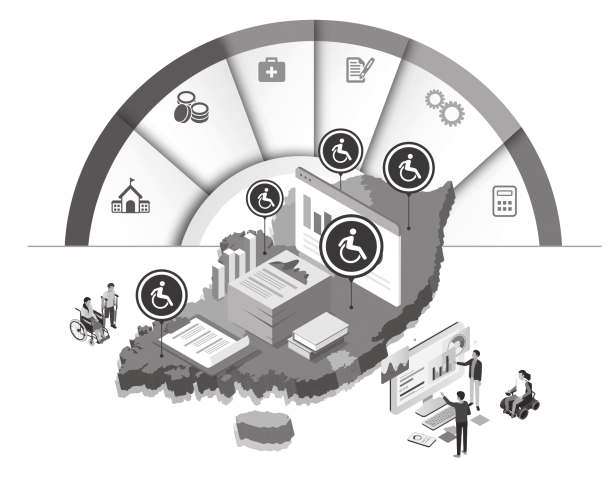
Jeonbuk's Evaluation of Disability Welfare Services in 2025 'Average'... Falls slightly short of the national average
...
jbdn.kr Partnership(2025-11-19 12:35:00)
Jeollabuk-do scored 56.93 points in the evaluation of disability welfare service support areas for 2025, slightly below the national average of 57.90 points. However, this marks a 15% increase from the previous year, indicating steady improvements in disability welfare infrastructure overall, which is positively evaluated. While Jeollabuk-do moved up from the 'effort' grade to the 'average' grade last year, it still remains below the national average for the second consecutive year, highlighting the need for further improvements.
According to the "2025 National Comparison Study of Disability Welfare and Education by City and Province" released by the Korea Disabled People's Federation (Korea Jangchon), Jeollabuk-do received improved scores in most key evaluation criteria compared to the previous year, including the operation of disability welfare facilities, expansion of vocational rehabilitation facilities, securing of specialized personnel, and service accessibility for user organizations. Particularly, the expansion of vocational rehabilitation bases, improvement of service accessibility, and reinforcement of on-site staff indicate that Jeollabuk-do's disability welfare service capabilities are growing steadily and more stably than before.
Nationally, it was revealed that 11 out of 17 cities and provinces fell below the average score, showing significant disparities in welfare levels among regions. While Jeollabuk-do maintains a mid-range position within this trend, there still exists a gap when compared to top-ranking regions such as Jeju, Seoul, and Gwangju. Experts point out that for Jeollabuk-do to take a further leap, continuous infrastructure expansion, development of tailored services tailored to the characteristics of disabilities, and stable securing of specialized personnel are essential.
To achieve qualitative changes alongside quantitative growth in Jeollabuk-do's disability welfare services, there is a consensus on the need for policy adjustments tailored to regional characteristics, such as addressing uneven regional accessibility, the increasing population of elderly people with disabilities, and the growing demand for care for severely disabled individuals. Officials in Jeollabuk-do have expressed their commitment to strengthening a welfare system centered on the field and continuously discovering policies that can bring substantial changes to the daily lives of people with disabilities.
The evaluation results show that while Jeollabuk-do's disability welfare services are continuing on a path of improvement, there are clearly defined challenges that need to be addressed in the future. Based on the official report from the Korea Disabled People's Federation, this indicator is expected to serve as an important reference for setting the direction of Jeollabuk-do's disability welfare policies in the future.