'Yechon Samgangnaru Jumak' Designated as National Intangible Cultural Heritage
...
Lee ByungJae(2025-11-27 10:44:15)
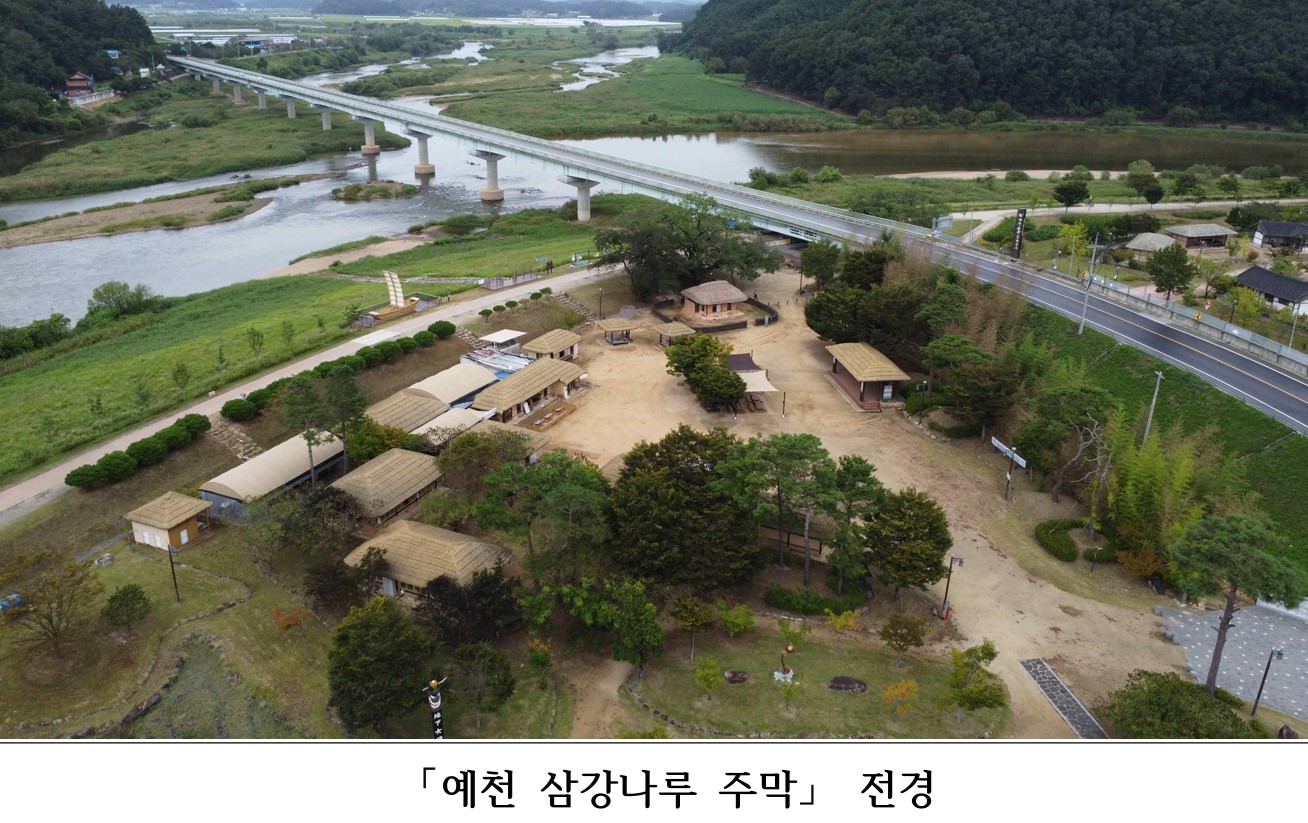
The Cultural Heritage Administration (Director Heo Min) has designated the 'Yecheon Samgang Naru Jumak' in Pungyang-myeon, Yecheon-gun, Gyeongsangbuk-do as a national intangible cultural heritage.
The 'Yecheon Samgang Naru Jumak' has a historical value as it has been operated as a jumak (traditional Korean tavern) for over 100 years from around 1900 to 2005, against the backdrop of a narutte where the Nakdong River, Geumcheon, and Naeseongcheon converge.
Despite the great flood in 1934, it has retained its original form without significant alterations, with a front structure of 2 rooms and 2 side rooms. The main room where the jumak owner resides and a separate room for guests are each one room, with a kitchen and a porch at the back in a rectangular layout, minimizing connecting lines to create a concentrated spatial configuration that is faithful to the function of receiving guests. Additionally, it features a unique heating system with a kitchen hearth connected to each room separately.
In the attic above the kitchen accessible from the main room, there is a seongjudanji (altar to protect the house, housing the household god) to ward off floods or fires and pray for the safety of the jumak, displaying the belief in household gods. The circular lines drawn on the mud walls inside the kitchen to indicate external processing are well preserved, serving as a very rare material that showcases the aspect of the jumak heritage.
Together with the jumak located at the entrance of the village connected to the narutte, the embankment includes a dongshinmok (sacred tree for village deity) and namgeunseok (stone for village deity ceremonies), forming the historical and cultural landscape of the jumak. Furthermore, the continuity and sustainability as an intangible cultural heritage are confirmed through the document 'Dongshin Gyesaek' recording the history of the dongje (village deity ceremony) that has been carried out for the past 130 years. Especially, it is confirmed that offerings (burned paper) were made to 'Gangshin' for the Samgang Naru and 'Jumak Suhosin' for the Samgang Jumak during the dongje, and documents such as the 'Samgang Dosun Gye' formed and operated by the village are preserved, allowing for a comprehensive understanding of the history and folklore of the narutte and jumak.