Jeonju Cultural Foundation Secures Domestic Traditional Hanji Raw Materials
...
Lee ByungJae(2025-12-03 13:21:59)
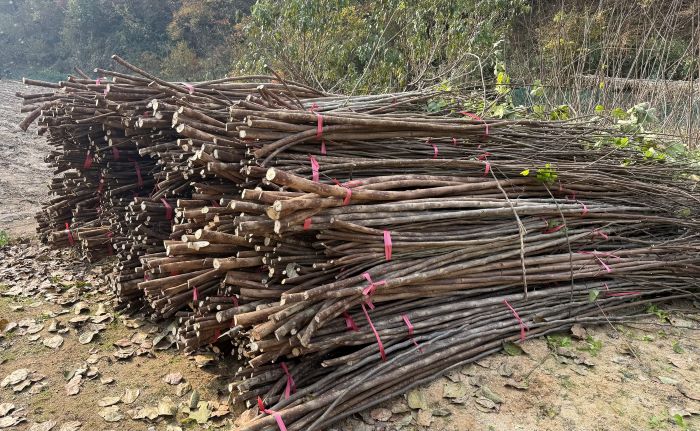
The Jeonju Cultural Foundation (Representative Director Choi Rak-gi) Hanji Promotion Institute has secured 30 tons of high-quality paper mulberry trees cultivated in the Jeonju region, further strengthening the stable supply base of domestic traditional hanji materials.
This procurement is expected to directly contribute to the improvement of quality and enhancement of industrial competitiveness by increasing the domestic yield of paper mulberry, a core raw material of traditional hanji.
The domestic traditional hanji industry has long been dependent on imported raw materials. In order to improve this, since 2017, Jeonju City and the Jeonju Cultural Foundation have been promoting the 'Jeonju Paper Mulberry Domestic Yield Expansion Project,' and since 2019, they have been actively promoting the 'Jeonju Paper Mulberry Procurement Project,' continuously enhancing the cooperative system with local farming households.
This year, the Jeonju Cultural Foundation has been cultivating and managing paper mulberry trees in 12 farming households and 20 fields within Jeonju City, and plans to expand the cultivation base to a total of over 31,000 trees by securing an additional field in Heukseokgol area by 2025.
The 30 tons of paper mulberry procured this time is a significantly increased quantity compared to the previous year (20 tons), and through the processing of paper mulberry, approximately 4.5 tons of black bark can be produced. This amount is equivalent to producing about 530,000 sheets of traditional hanji based on A4 paper standards.
The Hanji Promotion Institute plans to partially utilize the black bark from Jeonju paper mulberry secured this time in the production of traditional hanji at the Jeonju Millennium Hanji Museum, and supply the rest to local hanji workshops and traditional hanji manufacturers to further strengthen the local hanji industry ecosystem.