Wanju County Discloses Results of Comprehensive Survey of Sites Related to Donghak Peasant Revolution... Academic Investigation of Samnye Second Uprising Site
...
Editor(2025-12-25 19:01:30)
Wanju County has announced the research results that reevaluate the historical significance of the Donghak Peasant Revolution and organize the academic value of the historical sites scattered throughout the region.
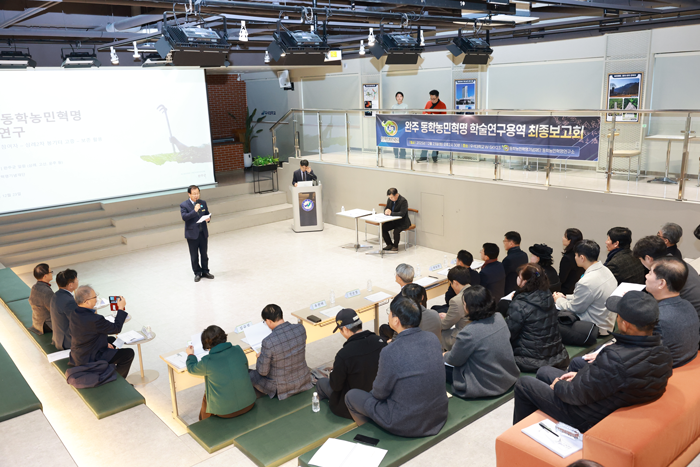
According to Wanju County, on the 23rd, they held the 'Wanju County Donghak Peasant Revolution Academic Research Service Final Report Meeting' at W-SKY23, Uiseong University, to discuss the research findings and future utilization plans. The meeting was attended by around 50 people, including Yu Hee-tae, the head of Wanju County, provincial and county council members, academic experts, and officials from the Donghak Peasant Revolution Memorial Foundation.
This research, commissioned by Wanju County to the Donghak Peasant Revolution Memorial Foundation from September to December, conducted a comprehensive survey of the Donghak Peasant Revolution-related relics scattered throughout Wanju County. In particular, it focused on academically clarifying the location of the Samnye Yeokcham area known as the site of the second Donghak Peasant Revolution.
During the final report meeting, the research results on the development process of the Donghak Peasant Revolution in Wanju area, the current status of major historical sites, and the non-definitive study results on the location of the Samnye Yeokcham as the site of the second Donghak Peasant Revolution were presented. Suggestions for the preservation and utilization of cultural heritage were also proposed.
Yu Hee-tae, the head of the county, stated, "The systematic organization of Wanju's position and role in the history of the Donghak Peasant Revolution is an achievement," and expressed, "Based on the research results, we will expand into cultural heritage designation review, relic maintenance, education, exhibition, and commemorative projects."
Wanju County plans to promote systematic management and preservation of related relics based on the research results, and will continue to explore ways to strengthen regional identity and utilize historical and cultural resources.