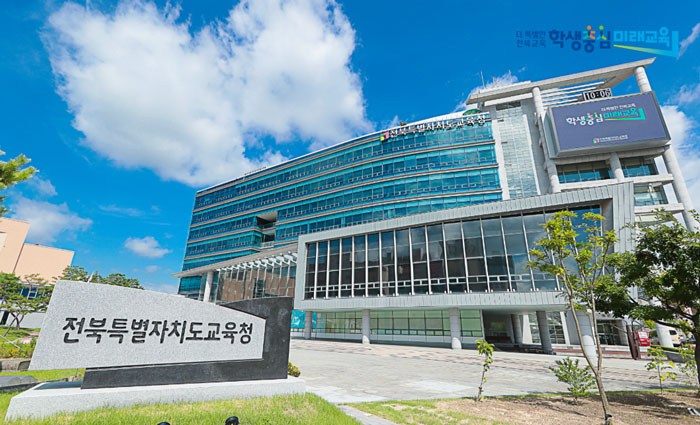
전북교육은 오래된 불신의 늪에 빠져 있다. 지난 15년 동안 전북교육은 법을 가르치던 이들이 법의 경계를 가볍게 넘나들고, 교직사회 내부의 힘겨루기가 학생과 학부모를 ‘상대편’으로 세우는 장면을 반복해 왔다. 이 지점에서 교육행정은 더 이상 교육을 말하기 어려워진다. 2026년 6월 3일 치러질 전북교육감 선거는 이 악순환을 끊는 분기점이 되어야 한다.
법을 가르치던 이들의 위법, 남은 것은 냉소
김승환 전 교육감은 공무원 승진 인사에 부당하게 개입한 혐의로 대법원에서 직권남용·지방공무원법 위반이 인정돼 벌금 1천만원을 확정받았다. 선출직 교육감이 인사권을 ‘공정한 절차’가 아니라 ‘사적 의중’의 도구로 오염시켰다는 점에서 상징성이 컸다. 벌금형이라 직은 유지됐지만, 전북교육에 남긴 것은 “결국 권력은 견제받지 않는다”는 냉소였다.
서거석 전 교육감 역시 2022년 교육감 선거 과정에서 허위사실 공표 혐의로 항소심에서 벌금 500만원을 선고받고, 대법원에서 당선무효형이 확정되며 교육감직을 상실했다. 교육감 선거에서 벌금 100만원 이상이 확정되면 당선이 무효가 된다. 이로 인해 전북교육청은 현재 권한대행 체제로 운영되고 있다. 법학자 출신이든 아니든, ‘법을 아는 사람’이 오히려 법의 취지와 정신을 무너뜨리는 장면이 반복될 때 교육행정에 대한 신뢰는 급속히 붕괴된다.
교원단체 경쟁, ‘교육공동체’ 아닌 ‘지분’으로 보일 때
전교조·교총·교사노조 등 교원단체의 존재 자체는 교원의 권익과 교육정책 논의를 위해 필요하다. 문제는 경쟁의 언어가 ‘학생’과 ‘교육의 질’이 아니라 ‘우리 몫’으로 기울 때다. 특정 학교급·직급의 불균형을 바로잡자는 문제 제기가 곧장 “우리 사람 더 달라”는 요구로만 읽히는 순간, 교육청의 인사와 정책은 ‘공공성’이 아니라 ‘조합 간 전선’으로 인식된다.
더 심각한 대목은 일부 교원단체나 일부 교사 집단에서 나타나는 퇴행적 동원 방식이다. 학부모를 ‘악성 민원’으로 단순 낙인찍고, 폐쇄적 공간에서 혐오·조롱을 유통하며 내부 결속을 다지는 방식이 반복되면, 교권은 강화되는 것이 아니라 교사 전체의 공적 신뢰가 무너진다. 교권과 학생인권, 학부모 권리를 제로섬 게임으로 몰아가는 프레임은 결국 학교를 전쟁터로 만든다.
사법 리스크가 일상이 되면, 교육은 ‘방어 행정’으로 전락한다
한 축에서는 교육감이 선거·인사 문제로 법정에 서고, 다른 축에서는 주변 인사 논란이 연쇄적으로 불거진다. 그 결과 교육청은 정책 역량을 ‘학생 지원’이 아니라 ‘방어·홍보·캠프 관리’에 소모하는 구조를 고착시켰다. 선출된 수장이 퇴장한 뒤에도, 과거 캠프의 관성처럼 남은 인사 네트워크가 행정조직을 통해 영향력을 이어간다는 의심이 커질수록 불신은 더 깊어진다.
권한대행 체제는 단지 “무사히 넘기기”에 머물러선 안 된다. 갈등을 정리하고 신뢰를 회복하는 ‘과도기 행정’의 책임을 져야 한다. 행정은 법과 절차의 중립을 지키되, 그 이름으로 책임 회피와 현상 유지만 반복해서는 안 된다. 불신을 직시하고, 투명성과 공정성을 높이는 제도적 장치를 마련하는 일이 권한대행 체제의 최소한의 책무다.
새로운 교육감이 넘어야 할 선거 구태
법 위반과 도덕성 논란, 집단이기주의, 사법 리스크가 남긴 유산을 비판하면서도 정작 그 힘에 기대 당선을 노리는 사람이 교육감을 꿈꾸게 해서는 안 된다. 교육감은 특정 노조·정파·캠프의 후원자가 아니라, 학생·학부모·교직원이 함께 신뢰할 수 있는 ‘공적 대표’여야 한다.
새 교육감이 반드시 세워야 할 원칙은 분명하다.
첫째, 선출 기준은 ‘법 준수·도덕성·갈등 조정 능력’을 갖춘 사람이어야 한다. 인사·선거에서 법을 가볍게 여긴 전력, 혹은 사법 리스크 앞에서 성찰과 책임을 회피하는 태도는 후보 자격을 스스로 훼손한다.
둘째, 교원단체는 ‘교사 중심’이 아니라 ‘교육공동체 중심’으로 사고를 전환해야 한다. 학생과 학부모를 적으로 만드는 프레임, 혐오와 조롱으로 내부를 결속하는 방식은 교권을 지키는 길이 아니다. 교권은 학생의 배움과 성장, 학부모와 지역사회의 신뢰 위에서만 지속될 수 있다.
셋째, 교육청은 갈등을 ‘민원 vs 교권’의 단순 구도로 재단하지 말고, 학생의 안전과 학습권을 최우선 원칙으로 삼아야 한다. 그 위에서 상호 존중과 책임을 원칙으로 하는 학교민주주의 모델을 다시 세워야 한다. 갈등 조정 시스템, 학부모·학생 참여 구조, 교사 지원 체계를 정교하게 설계하는 것이 교육청의 역할이다.
집단이기주의와 법 위반, 사법 리스크의 그늘을 지우지 못하면 전북교육은 앞으로도 “누가 더 나은 교육자냐”가 아니라 “누가 덜 문제냐”를 고르는 선거를 반복할 수밖에 없다. 이는 학생과 학부모, 교직원 모두에게 불행한 선택이다.
2026년 전북교육감 선거는 그 악순환을 끊는 첫 장면이어야 한다. 도민은 용기와 분별을 가지고 후보를 검증해야 하고, 후보는 그 기대를 말이 아니라 구체적 이력과 책임 있는 행동으로 증명해야 한다. 교육은 정치와 진영의 전리품이 아니라, 다음 세대의 삶을 좌우하는 공공재라는 상식을 이번 선거에서만큼은 분명히 해야 한다.
North Jeolla Education, Must Escape the Swamp of Distrust
The 2026 Education Superintendent Election Should Be a Turning Point
Education in Jeonbuk has fallen into a long-standing swamp of distrust. Over the past 15 years, education in Jeonbuk has seen those who were supposed to teach the law casually crossing its boundaries, and power struggles within the educational community have repeatedly placed students and parents as the 'opponents'. At this point, educational administration finds it increasingly difficult to speak about education. The Jeonbuk Education Superintendent election scheduled for June 3, 2026, should be a turning point to break this vicious cycle.
Wrongdoings of Those Who Taught the Law, Leaving Only Cynicism
Former Superintendent Kim Seung-hwan was fined 10 million won by the Supreme Court for abuse of power and violation of the Local Public Officials Act for unjustly intervening in civil service promotions. The symbolic significance lay in the fact that an elected superintendent had tainted their appointment authority not with a 'fair process' but with 'personal intentions'. While the fine was upheld, what remained in Jeonbuk education was a cynicism that ultimately 'power goes unchecked'.
Former Superintendent Seo Geo-seok also faced legal issues during the 2022 superintendent election process, being fined 5 million won for spreading false information and having his election annulled by the Supreme Court, resulting in his removal from office. If a fine of over 1 million won is confirmed in the superintendent election, the election is invalidated. As a result, the Jeonbuk Education Office is currently operating under an acting capacity. Whether from a legal background or not, scenes where even those who 'know the law' undermine the spirit and purpose of the law erode trust in educational administration rapidly.
Competition Among Teacher Organizations, When Seen as 'Shares' Rather Than an 'Educational Community'
The presence of teacher organizations such as the Jeonbuk Teachers' Union, the Korean Teachers and Education Workers' Union, and others is necessary for safeguarding teachers' rights and discussing educational policies. The problem arises when the language of competition shifts from 'students' and 'quality of education' to 'our share'. When demands to correct imbalances in specific school levels or positions are interpreted as mere requests for "more of our people," educational office appointments and policies are perceived not as 'public' but as 'frontlines between associations'.
Even more concerning is the regressive mobilization methods seen in some teacher organizations or teacher groups. When labeling parents' concerns as 'malicious complaints', circulating hatred and ridicule in closed spaces to strengthen internal cohesion, the result is not an enhancement of teaching authority but a breakdown of public trust in teachers as a whole. Framing teaching authority and student rights, and parental rights as a zero-sum game ultimately turns schools into battlefields.
When Judicial Risks Become Routine, Education Descends into 'Defensive Administration'
On one hand, education superintendents face legal issues related to elections and appointments, while controversies surrounding surrounding personnel continue to surface. As a result, the Education Office has become entrenched in a structure that consumes its policy capacity in 'defense, promotion, and camp management' rather than 'student support'. Even after a leader has left, suspicions grow that the remaining personnel networks from past camps continue to exert influence through administrative organizations, deepening distrust.
An acting capacity should not merely linger on 'getting through unscathed'. It must take on the responsibility of resolving conflicts and restoring trust through 'transitional administration'. Administration must uphold the neutrality of laws and procedures, but should not repeat the cycle of responsibility avoidance and maintaining the status quo in its name. Confronting distrust and establishing institutional mechanisms that enhance transparency and fairness is the minimum duty of an acting capacity.
The Electoral Course the New Superintendent Must Navigate
While criticizing the legacies of law violations, ethical controversies, groupism, and judicial risks, it should not be acceptable for those aspiring to the superintendent position to rely on those very forces for their election. The superintendent should not be a supporter of specific unions, factions, or camps, but a 'public representative' trusted by students, parents, and educational staff alike.
The Principles the New Superintendent Must Uphold Are Clear
First, the selection criteria should be someone who possesses 'law-abiding, ethical, and conflict resolution abilities'. A track record of disregarding laws in appointments or an attitude of avoiding reflection and responsibility in the face of judicial risks undermines one's candidacy.
Second, teacher organizations should shift their thinking from being 'teacher-centric' to 'education community-centric'. Framing students and parents as enemies, and using hatred and ridicule to solidify internal bonds is not the way to safeguard teaching authority. Teaching authority can only be sustained on the basis of student learning and growth, and the trust of parents and the local community.
Third, the Education Office should not simplify conflicts into a mere dichotomy of 'complaints vs. teaching authority', but prioritize student safety and learning rights. A school democratic model based on mutual respect and responsibility must be reestablished. Designing conflict resolution systems, parent-student participation structures, and teacher support systems with precision is the role of the Education Office.
If groupism, law violations, and judicial risks are not addressed, Jeonbuk education will continue to repeat elections where the choice is not about "who is the better educator" but "who is the lesser problem". This is an unfortunate choice for students, parents, and educational staff alike.
The 2026 Jeonbuk Education Superintendent election should mark the first scene in breaking this vicious cycle. Citizens must scrutinize candidates with courage and discernment, and candidates must prove themselves not through words but through concrete backgrounds and responsible actions. Education should not be a political and factional spoils, but a public good that shapes the lives of the next generation, a common sense that must be clearly upheld in this election.
뉴스로 배우는 영어
📝 Brief Summary:
The article discusses the challenges faced in the education system of Jeonbuk due to issues like power struggles, law violations, and groupism among teacher organizations. It emphasizes the need for the 2026 Education Superintendent election to be a turning point in breaking this cycle and restoring trust in educational administration.
🗣️ Natural Korean Translation:
이 기사는 전북 교육 제도에서 발생하는 문제점들에 대해 논하며, 권력 다툼, 법률 위반, 그리고 교사 단체들 사이의 그룹주의 등으로 인한 어려움을 다룹니다. 이는 2026년 전북 교육감 선거가 이러한 악순환을 깨고 교육 행정에 대한 신뢰를 회복하는 전환점이 되어야 한다는 필요성을 강조합니다.
❓ Comprehension Questions:
1. What are some of the challenges faced by the education system in Jeonbuk according to the article?
교육제도가 전북에서 직면하는 어려움은 무엇인가요?
2. Why is the 2026 Jeonbuk Education Superintendent election considered crucial in the article?
기사에서 2026년 전북 교육감 선거가 왜 중요하다고 여겨지나요?
3. What principles should the new superintendent uphold according to the article?
기사에 따르면 새로운 교육감은 어떤 원칙을 준수해야 하나요?
💡 Vocabulary Learning:
1. Distrust
- 불신, 의심 (Noun)
- Lack of trust or confidence in someone or something.
- 학부모들 사이에 불신이 팽배했다.
- Distrust among parents was widespread.
2. Cynicism
- 냉소주의, 비관주의 (Noun)
- An attitude of distrust or pessimism.
- 그는 학생들의 성공을 냉소적으로 바라봤다.
- He viewed the success of the students cynically.
3. Mobilization
- 동원, 총동원 (Noun)
- The action of a country or its government preparing and organizing troops for active service.
- 국가는 군대를 총동원하기 시작했다.
- The country began the mobilization of its troops.
4. Neutrality
- 중립성 (Noun)
- The state of not supporting or helping either side in a conflict, disagreement, etc.
- 그 조직은 중립성을 유지해야 한다.
- The organization must maintain neutrality.
5. Dichotomy
- 이분법, 이분법적 사고 (Noun)
- A division or contrast between two things that are or are represented as being opposed or entirely different.
- 그들은 이분법적 사고를 버렸다.
- They abandoned dichotomous thinking.